
1. Roast the Figs
Preheat the oven to 200°C (400℉).
Wash and dry the figs well. Cut off the stems and cut the figs into quarters or, if they’re very large, 6 pieces. Keep the skin on. It helps the figs hold their shape as they roast.
Place the figs in a small baking dish and gently toss with 35 grams of honey, zest of ½ orange, 1 tablespoon of orange juice, 1 teaspoon of vanilla, and a pinch of salt.
Arrange them in a single layer, preferably cut-side up, and roast for 15–20 minutes, or until the figs are softened and caramelised around the edges but still retain their shape.
After roasting, remove the figs from the baking dish and let them cool completely. Cut any larger pieces down to roughly 1 cm (⅜ inch) before assembling.
Pour the remaining juices into a small saucepan and simmer gently until reduced to a thick, glossy syrup. If necessary, add 1–2 teaspoons of cornstarch slurry (1 teaspoon of cornstarch mixed with 1 teaspoon of liquid—either water or orange juice).
You can roast the figs a few hours ahead and refrigerate them. Do not reduce the figs themselves into a jam. The aim is to have small, concentrated pieces of roasted fig coated with intensely flavoured honey-orange juices.
2. Make the Sponge Base
Reduce the oven heat to 180°C (350°F) and line a 33×43 cm (13″×17″) baking tray with a sheet of baking parchment.
Separate the eggs, making sure there is no yolk in the whites. Using an electric mixer, beat the egg whites with a pinch of salt until soft peaks form. Gradually add half of the sugar and whisk until glossy and firm. Set aside.
In a separate large bowl, whisk the egg yolks and the remaining sugar until pale and very thick. It can take about 5 minutes.
Sift the flour over the mixture and mix very gently at low speed until the flour is incorporated. Gently fold the egg whites into the yolk mixture in batches. Take care not to deflate the batter.
Pour the batter into the lined baking tray and smooth it out. Bake the sponge for 10–12 minutes, or until the sponge is lightly golden and springs back gently when touched. It bakes very quickly so keep an eye on it. Once baked, allow the sponge to cool completely.
3. Make the Honey Pistachio Mascarpone
Whip 200 millilitres of cold whipping cream to soft peaks. It should be fluffy but still soft and creamy.
In another bowl, gently loosen 250 grams of Mascarpone with 50 grams of honey, 1 teaspoon of vanilla extract, zest of ½ orange, and a tiny pinch of salt.
Fold in 50 grams of finely ground pistachios. Add the whipped cream in two or three additions, folding gently until smooth and light.
Finally, fold in 30 grams of chopped roasted pistachios.
The finished cream should be fluffy and spreadable while still firm enough to hold its shape.
4. Prepare the Sponge for Assembly
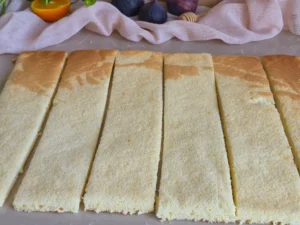
Cut the vanilla sponge into even strips, approximately 5–6 cm (2”–2.4”) wide. Trim the edges if needed. Keep the strips flat and intact.
5. Assemble the Vertical Cake
Spread each strip with a thin, even layer of the pistachio Mascarpone. Don’t use too much filling. A thin layer will make the cake much easier to roll and keep the finished structure neat.
Distribute small pieces of the roasted figs over the cream and drizzle with some of the reduced fig syrup, reserving a small amount for the garnish.
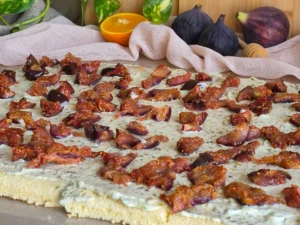
Start with your first roll quite tightly. The centre determines the geometry of the entire cake.
Place the rolled strip upright on your serving plate.
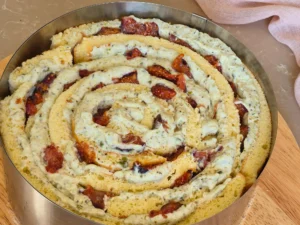
Take the next strip and continue wrapping it around the outside of the first spiral, matching the edges carefully. Let each strip naturally follow the curve.
An adjustable cake ring helps keep the shape. Place the ring around the cake and tighten.
Refrigerate for 60–90 minutes to allow the cake to firm up and settle.
5. Decorate
Once chilled, spread a thin layer of the remaining Mascarpone cream around the outside of the cake and garnish with roasted pistachios.
You don’t need to make it perfectly smooth — a softly textured finish suits the rustic elegance of the figs.
Top with fresh fig halves or quarters and drizzle very lightly with honey and the fig syrup. Scatter generously with roasted pistachios.
A few simple things can make all the difference.
Keep the cake covered and refrigerated for up to 2 days. For the best texture and flavour, allow the cake to sit at room temperature for about 20 minutes before serving.
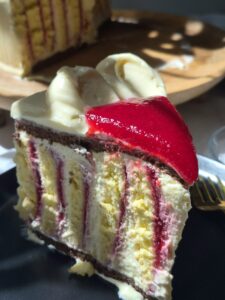
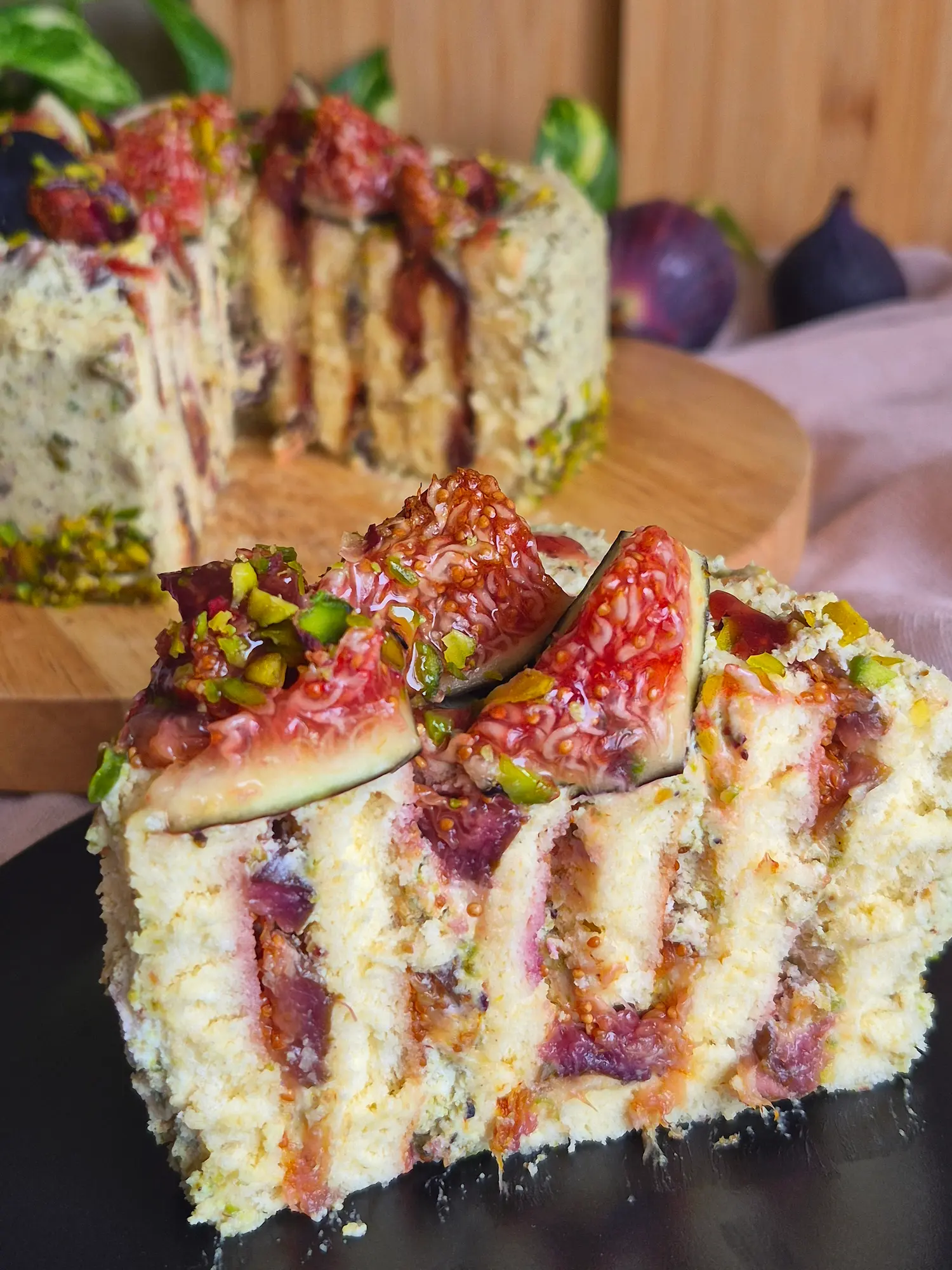
Serve in generous slices so that the vertical layers are visible.
The combination of soft vanilla sponge, creamy honey Mascarpone, concentrated roasted fig, orange and toasted pistachio makes this cake particularly lovely with coffee or tea — and just as fitting for an autumn afternoon gathering.
Feel free to play around with the flavours and fillings.
Can I use dried figs?
I recommend fresh figs for this recipe. Their moisture and texture are important to the roasted fruit layer, and fresh figs develop beautifully caramelised edges in the oven.
Do I need to peel the figs?
No. Keep the skin on. It helps the figs retain their shape while roasting and becomes tender during baking.
Can I use fig jam instead?
You can, but I wouldn’t recommend it for this particular cake. Roasting the figs gives you something much more interesting: little pieces of concentrated fruit surrounded by a glossy honey-orange syrup rather than a uniform jam layer.
Can I make the roasted figs ahead?
Absolutely. The roasted figs and reduced syrup can be prepared a day ahead and kept refrigerated in an airtight container. Bring them out when you’re ready to assemble the cake.
Why is my Mascarpone filling too soft?
Make sure both the Mascarpone and whipping cream are cold. The whipping cream should be whipped to soft peaks before being folded into the Mascarpone. If the finished filling is still too soft to spread neatly, refrigerate it for 10–15 minutes before assembling the cake.
Can I make the cake ahead of time?
Yes. The assembled cake can be refrigerated for up to two days. For the best texture, take it out of the refrigerator about 20–30 minutes before serving.
Why did my vertical layers move while I was assembling the cake?
The most common reasons are too much filling, warm fig mixture or a sponge that is too thin or dry. Use a relatively thin layer of Mascarpone, make sure the figs are completely cool and work with equal-width sponge strips.
Can I freeze this cake?
I don’t recommend freezing the fully assembled cake because the Mascarpone filling and fresh figs can change texture after thawing. If you want to work ahead, the sponge can be baked, cooled and well wrapped before freezing.
If you love the idea of a rolled layer cake, you might also like:
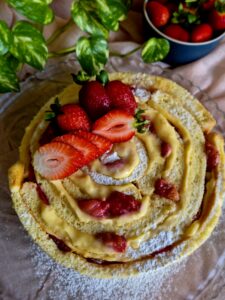
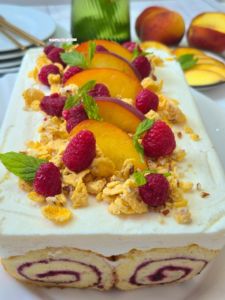
Raspberry Vanilla Rolled Layer Cake
There is something about figs that makes a cake feel like the season is changing.
For this cake, I didn’t want to turn fresh figs into another sweet, smooth jam filling. Roasting them concentrates their natural sweetness while keeping little pieces of fruit intact, and the honey and orange bring out their deeper, almost caramel-like flavour.
Together with a soft vanilla sponge, silky Mascarpone and plenty of toasted pistachios, the result is delicate but full of character.
It’s the kind of cake I want at the very beginning of autumn — when summer hasn’t quite left the table, but the first golden flavours of the new season are beginning to appear.
And if you’re wondering whether those little vertical layers are worth the extra step: absolutely. The surprise when you cut into the cake is part of the pleasure.
Comments